The idea in one minute
The second visit starts with another reason to need the result.
Retention means people continue using a product over time. A good first experience can earn attention; useful help with a returning need gives someone a reason to choose it again. The right rhythm might be daily, weekly or only when a particular situation comes back.
A first plan is only the beginning
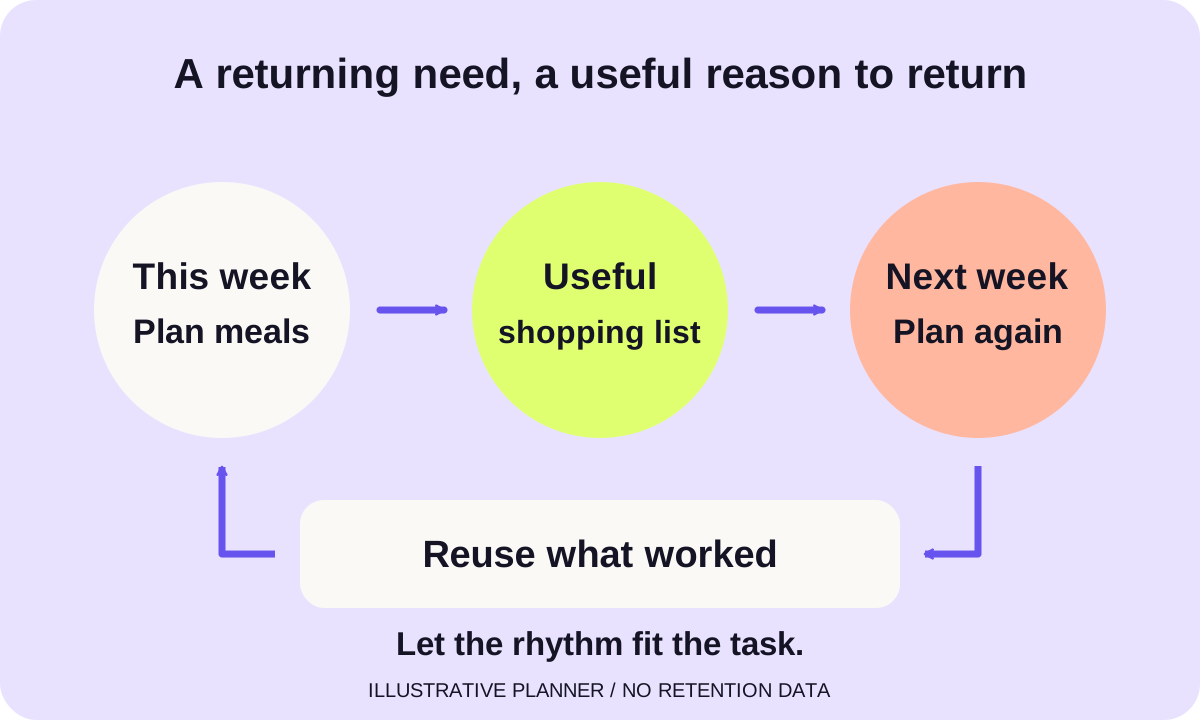
Imagine a simple meal-planning tool. On Sunday, you choose a few meals and get a shopping list. That is the first useful result. The following Sunday, you need to plan again—but now you remember what the family liked, what went uneaten and which ingredients are left. This is an illustrative example, not a product we have tested.
The second visit could begin from that experience. Reuse a favourite meal, adjust the list and avoid buying another bag of something already in the cupboard. The tool has a purpose because the work returns, and it carries forward something helpful from the last time.
This is different from simply persuading someone to reopen an app. A bright notification can attract a tap. It cannot, by itself, make a shopping list more useful.
Find the thing that becomes useful again
Repeat value is the benefit someone can get on another occasion. Sometimes it comes from new information: this week’s available ingredients. Sometimes it comes from progress: the next lesson after the one already completed. Sometimes it comes from remembered work: a plan that does not need rebuilding.
For the meal planner, keeping last week’s decisions might matter more than adding a large recipe library. It depends on what people actually struggle with. GOV.UK’s user-research guidance starts with understanding people’s goals, their current methods and the difficulties they encounter. [1]
Ask about the next occasion, not just the first screen: what will the person need, what will have changed, and what will they want to keep? A clear answer gives the product a more useful direction than a general request to increase engagement.
Match the rhythm of the need
A weekly shopping list does not need to become a daily destination. A tool for making a wedding seating plan might be used intensely for a short period, then set aside. A guide that helps someone solve a one-time problem can be valuable even if they never open it again.
That changes how you judge a product. Low weekly return would be concerning for a weekly meal planner. It could be entirely unsurprising for a tool used only when someone moves house. Trying to manufacture frequent visits can create extra work for the person you meant to help.
A reminder can still be useful when it arrives at the right moment and the person wants it. The question is whether it helps them do the task. Letting people choose the timing—or stop reminders—respects the fact that their routine belongs to them.
Measure return alongside the result
Google’s HEART research treats retention and task success as separate ways to assess user experience. Returning users and successful tasks answer different questions. Its approach begins with goals, then identifies signals and measurements suited to those goals. [2]
For our illustrative planner, you might look at whether people who made a first plan make another when their next planning occasion arrives. Also check whether they can prepare the list, whether it misses things and what they say about using it. Merely opening the app does not tell you that the shopping became easier.
GOV.UK’s measurement guidance similarly recommends combining performance information with user research. If someone stops returning, learn why before drawing a conclusion: the tool may have disappointed them, their circumstances may have changed, or the task may be finished. [3]
Write the second-visit sentence
Try this on paper: ‘The next time this person needs to ___, they will return because ___.’ For the meal planner, the answer might be: ‘plan the week, because their previous choices give them a useful starting point.’ Then ask what happens if the person uses their existing notes instead.
A vague answer such as ‘because we will send a reminder’ points to something still missing. A specific improvement gives you a hypothesis to investigate. Test that improvement with willing users before building a system of rewards, streaks or extra messages around it.
The second visit is a small but revealing question. It asks what useful role the product will have after the novelty wears off—and whether that role fits how people actually live.
Read further
Sources.
References checked on . Source notes explain what each reference supports.
- GOV.UK — Learning about users and their needs ↗
Primary guidance on understanding current work and validating assumptions. The meal planner is an illustrative scenario.
- Rodden, Hutchinson and Fu — Measuring the User Experience on a Large Scale ↗
CHI 2010 primary research introducing HEART and goals/signals/metrics. Retention and task success are distinct categories, not a promise of growth.
- GOV.UK — Measuring the success of your service ↗
Combining performance information and user research to assess a service. Our suggested planning questions are editorial interpretation.
Keep exploring